Quality Control Is Managed in Microwave PCB
Microwave PCBs play a pivotal role in high-frequency circuitry, offering essential support for transmitting precise signals with minimal loss or interference. However, they are not without their challenges; the fabrication of microwave PCBs demands exceptional precision and attention to detail. In addition, the unique physics of microwave signals can pose particular challenges when designing the board. In order to overcome these obstacles, it is imperative that engineers adhere to best practices in the design phase, including rigorous impedance control and strategic signal routing techniques.
A number of factors influence the quality of a microstrip or stripline Printed Circuit Board (PCB). These include a good substrate material, appropriate design, and proper manufacturing processes. The substrate material should be an element with a good dielectric constant, coefficient of thermal expansion, and loss tangent that supports signal transmission in a wide range of frequencies. Furthermore, it should be highly stable and resistant to temperature fluctuations. It should also be able to withstand high-speed operations.
The etching and drilling processes for microwave pcb are crucial to the integrity of the finished product. They require specialized equipment that can achieve precise hole diameters and depths to accommodate a dense array of interconnects. The lamination process is another important step, as it involves combining layers of different materials to form a single composite. This process requires precision to maintain uniformity and stability for the entire board.
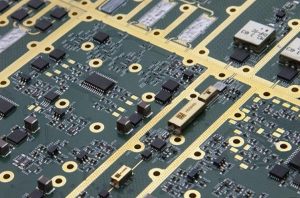
How Quality Control Is Managed in Microwave PCB
Microwave and RF PCBs are also subject to unique stresses that can compromise their performance. For instance, they are more sensitive to noise and require tighter impedance tolerances than traditional circuit boards. To reduce this effect, designers should implement ground plans and use generous bend radiuses on impedance-controlled traces.
Despite these challenges, a well-designed and manufactured RF or microwave PCB can deliver superior performance and reliability in a wide range of applications. Nevertheless, quality control remains an ongoing concern when dealing with these complex PCBs. A faulty or contaminated PCB can cause significant damage to devices that contain them, leading to costly warranty claims and reputational damage for the manufacturer. In some cases, a defective PCB can even cause injury or death. To mitigate these concerns, manufacturers should implement a thorough quality control program that includes visual inspection and electrical testing.
Visual inspection uses a camera to scan the surface of the board, detecting traces that are not properly routed or soldered. It also detects open and short circuits on critical nets in a non-invasive manner. This is a great way to identify faulty traces and components before they are placed in the production line. Moreover, it allows the manufacturer to quickly send this information back to the design team. This way, they can correct the issues and ensure that the final product meets all quality standards.